
Provider-Driven Approaches to Blending Table Game Elements with Slot-Based Jackpots for Mobile Bonus Optimization
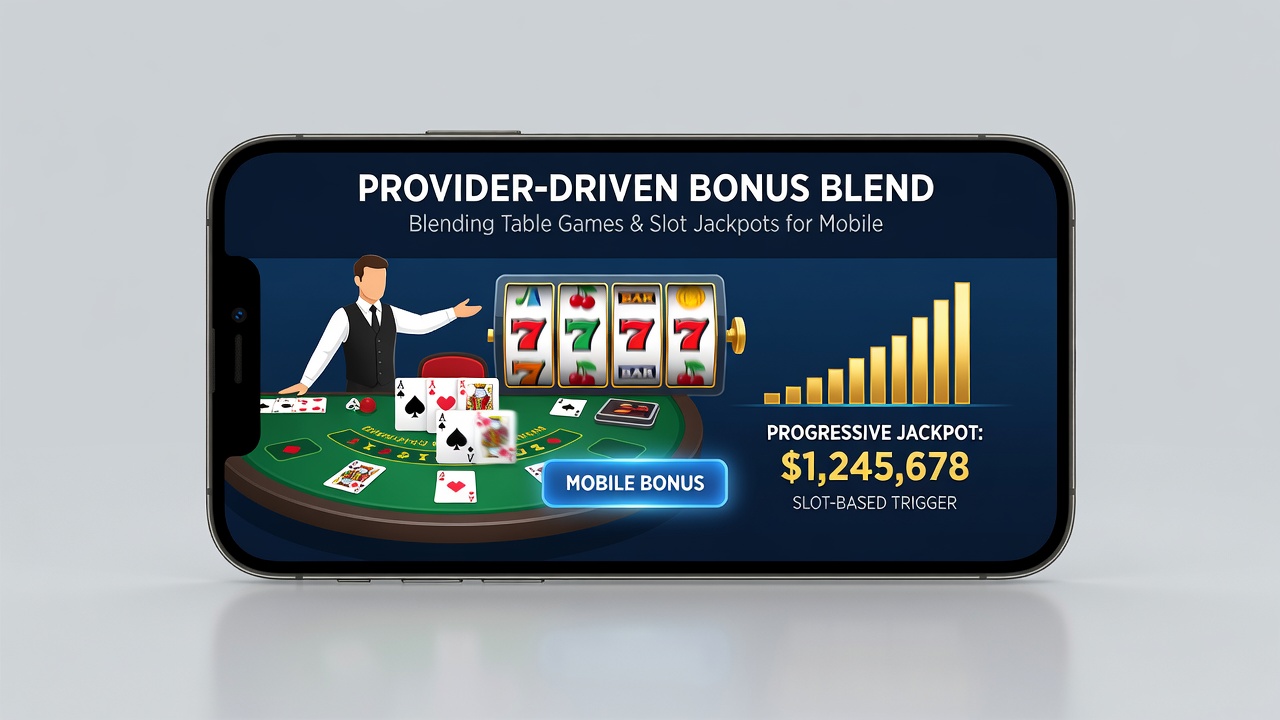
Software providers have developed systems that merge card mechanics from table games with the random number generator frameworks of slot machines, creating hybrid jackpot structures that function efficiently on mobile devices. These integrations allow reel spins to trigger side bets resembling blackjack decisions or roulette wheel segments, where accumulated multipliers feed directly into progressive jackpot pools. Data from multiple markets shows that such combinations increase session duration by channeling bonus activations through familiar table game rules rather than isolated spin sequences.
Core Mechanics in Provider Toolkits
Developers embed modular code libraries that let operators activate table-inspired features without rebuilding entire game engines, and these libraries handle real-time calculations for both slot payouts and table-style probability tables. One approach involves overlaying poker hand rankings onto scatter symbols so that matching combinations unlock jackpot tiers, while the underlying reels continue their independent spin cycles. Mobile optimization comes through touch-responsive interfaces that let users select hit-or-stand options during bonus phases without leaving the slot screen, reducing load times and data usage on handheld networks.
Integration Patterns Observed in 2025-2026 Releases
Throughout late 2025 and into September 2026, several major studios released updates that standardized the blending process across multiple titles. These updates introduced shared jackpot ledgers where contributions from both slot wagers and table element selections accumulate in unified pools, visible through mobile dashboards that update every few seconds. Observers note that the unified pools simplify bonus tracking for users who switch between portrait and landscape modes, because the same meter appears regardless of orientation.
Additional patterns include the use of conditional multipliers derived from roulette color sequences, where landing on red or black during a bonus round adjusts the final jackpot payout percentage before the mobile client confirms the outcome through encrypted server calls. Providers have documented these changes in technical white papers that outline API endpoints for operators seeking to deploy the features across regulated jurisdictions.
Bonus Optimization Techniques on Mobile Platforms
Mobile-specific optimizations focus on minimizing latency between table element selections and jackpot contributions, and providers achieve this by pre-loading probability tables onto the device cache during initial game launch. When a player triggers a blended bonus, the client applies cached values instantly while sending confirmation packets to the server, which prevents interruptions even on variable 4G or 5G connections. Research from academic gaming labs indicates that these caching methods correlate with higher completion rates for bonus rounds compared to fully server-dependent alternatives.
Another technique involves progressive scaling of jackpot seed amounts based on the complexity of the table element chosen, so that a simple even-money side bet seeds a smaller pool while a multi-card poker decision seeds a larger one. This scaling operates through algorithms that operators can adjust via backend dashboards without requiring new app store submissions, allowing rapid response to regional player preferences documented in aggregated usage statistics.
Regulatory and Technical Considerations Across Regions
Jurisdictions in North America and parts of Europe require that blended mechanics maintain the same randomness certification standards applied to standalone slots and table games, and providers address this by submitting combined test reports to independent laboratories. A report published by the Nevada Gaming Control Board outlines testing protocols that verify both the slot RNG and the table probability overlays function independently yet feed into shared jackpot ledgers without creating exploitable correlations.
In Australia, industry groups have compiled usage data showing that mobile users interact more frequently with blended bonuses when the interface presents table choices as optional overlays rather than mandatory steps. The Australian Gambling Research Centre has published summaries of these patterns, noting that optional overlays preserve the core slot experience while still directing wager portions toward the combined jackpot.
Conclusion
Provider-driven blending of table elements with slot jackpots continues to evolve through standardized code modules and mobile-first caching strategies that support consistent bonus delivery across devices. Documentation from regulatory bodies and research organizations demonstrates measurable impacts on session metrics when these approaches are implemented according to established testing protocols. As platforms update in September 2026 and beyond, further refinements to unified jackpot ledgers and touch-optimized decision points remain central to ongoing development cycles.